For parents
Is my child seeing well?
Children rarely say they cannot see well, because they assume everyone sees the way they do. This two-minute check walks through the everyday signs parents can spot at home, and what each one can mean.
Before you start
Call us instead of taking the check if you have noticed any of these:
- A sudden change in vision, or sudden double vision
- An eye injury, or something stuck in the eye
- A pupil that looks white or cloudy, or looks different from the other eye in photos
- An eye that has suddenly started to turn in or out
- A red, painful eye, or pain when looking at light
These need to be seen quickly. Call (512) 333-2207.
12 short questions. Your answers stay on this device. We do not save or receive them.
How old is your child?
Does your child squint, or close one eye, to see things far away, like the TV or a sign across the street?
Do they sit very close to the TV, or hold books and tablets close to their face?
Do they tilt or turn their head, or cover one eye, when they look at something?
Does one eye ever seem to drift in, out or up, especially when they are tired?
Do they rub their eyes or blink hard a lot when they are not sleepy?
Do they complain of headaches or tired eyes, especially after school or reading?
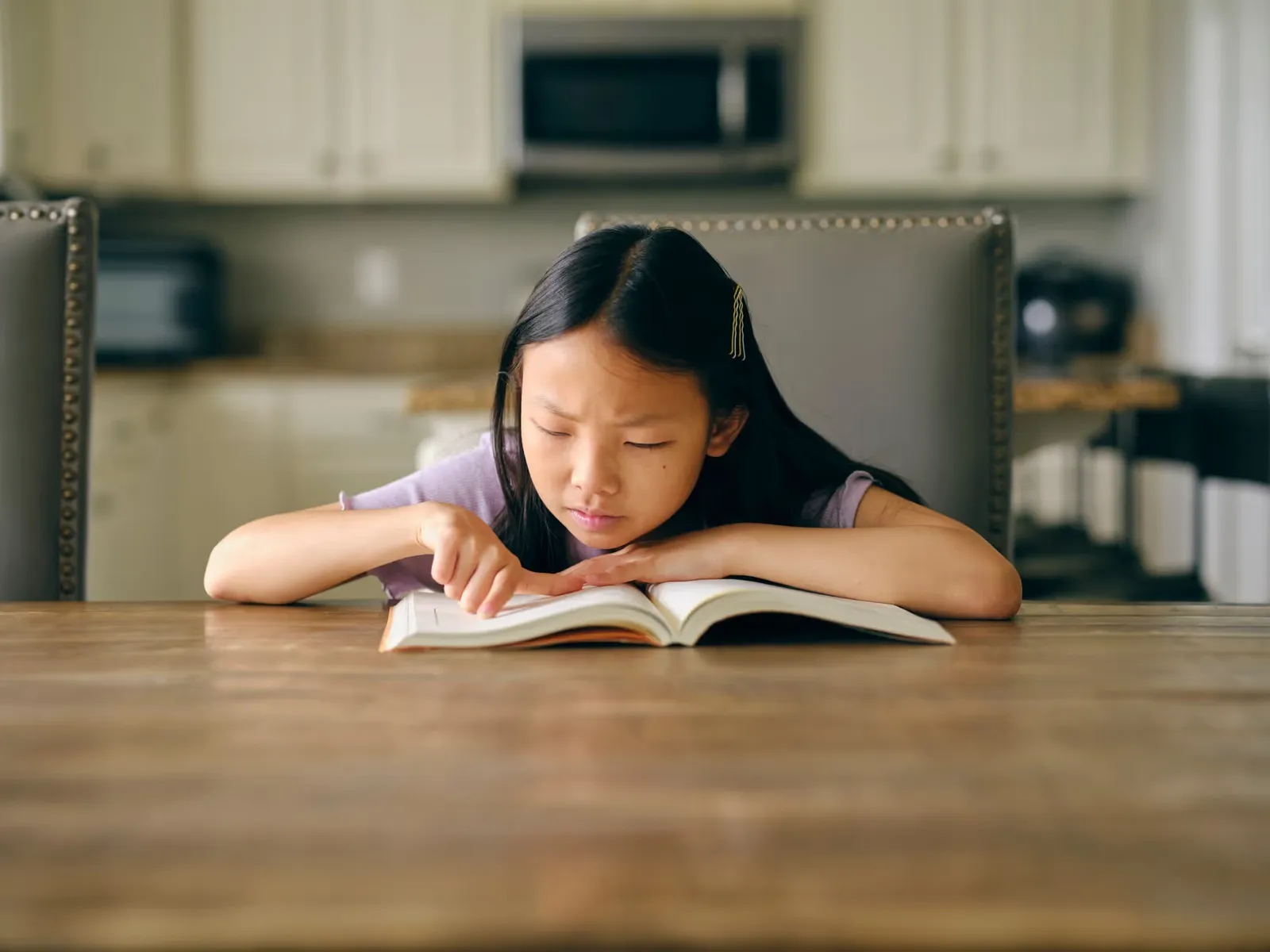
When they read, do they lose their place, skip lines or need a finger to keep track?
Do they avoid reading, drawing, puzzles or other close-up work, or give up on it quickly?
Do they have more trouble than other kids their age catching a ball, or bump into things often?
Does a parent, brother or sister wear glasses or contacts for nearsightedness?
Has your child had a full eye exam with an eye doctor? A vision check at school or at the pediatrician's office does not count.
Please call
This one should not wait.
What you have noticed needs to be looked at quickly, so please skip the online request form and call us at (512) 333-2207. If we are closed, or your child is in severe pain or has had a serious injury, go to an urgent care clinic or emergency room.
What you noticed
Your results
-
Squinting to see far away
Squinting sharpens a blurry picture for a moment. Children who do it a lot for distant things are often nearsighted.
-
Sitting close or holding things close
Getting closer makes things bigger and clearer. It is one of the common early signs of nearsightedness, though some kids simply do it out of habit.
-
Tilting the head or covering one eye
Children do this to favor the eye that sees better, or to stop seeing double. It can mean the two eyes are not working as a team, or that one eye is weaker than the other.
-
An eye that drifts
An eye that wanders, even now and then, should be looked at. When the eyes do not line up, the brain can start to ignore one of them, and that is easier to treat when it is caught young.
-
Rubbing the eyes or blinking hard
Often this is allergies or dry eyes. It can also be strain from working hard to keep things in focus.
-
Headaches or tired eyes
Eyes that work hard to focus get tired, and that can show up as a headache by the afternoon. Farsightedness and astigmatism are common causes, and both are easy to miss on a school screening.
-
Losing their place while reading
Reading takes steady focus up close and both eyes moving together along the line. If either is hard, children lose their place. A full exam checks how the eyes focus and work together.
-
Avoiding close-up work
Kids avoid what is uncomfortable. If close work blurs or strains their eyes, they may just stop doing it, and it can look like a short attention span.
-
Trouble judging distance
Judging distance takes two eyes working together. Trouble with it can point to a difference between the eyes.
Nearsightedness runs in families. With a nearsighted parent or sibling, a yearly exam matters more, even when you see no signs at home.
Your child had a full exam in the past year, which is right on schedule. If something on this list is new since then, mention it when you book.
It has been more than a year since your child's last full exam. We suggest one every year from age 3 to 18, because children's eyes change quickly.
Your child has not had a full eye exam yet. A school or pediatrician screening mostly checks distance vision, so a first full exam is worth booking even with nothing on this list.
We see children from age 3. For a younger child, talk to your pediatrician about what you have noticed, and call us if you would like to know when to bring them in.
This check is a guide to what is worth a closer look. It is not a diagnosis and it does not replace an eye exam.
Keep reading
Why a school screening is not an eye exam Nearsightedness in children, and how it is slowedHave Dr. Patel take a look
We see children from age 3. Tell us what you noticed when you book.
Request an appointment Or call (512) 333-2207Know another parent?
Pass the check along.